Stay-Put Remodel Quote Checklist
A stay-put remodel quote checklist for contractors pricing ADUs, additions, smart-home upgrades, and weatherproofing without letting scope sprawl eat margin.
June 15, 2026 · 6 min read · LightWork Team
Overview
More homeowners are trying to make the house they already own work harder. Thumbtack and Redfin called out 2026 demand for multigenerational layouts, ADUs, smart-home upgrades, and climate-adaptive work. A Talker Research survey commissioned by TAMKO found many homeowners already planning 2026 renovations, and The Washington Post reported the same stay-put pattern around additions and locked-in mortgages. For remodelers, carpenters, roofers, electricians, and handyman teams, that is good demand. It is also a scope trap. A customer who says "we want to stay here long term" can turn one estimate into five half-priced projects unless you quote the phases cleanly.
Build your implementation path with AI estimating workflows, pricing options, and guided setup.
The Core Answer
Quote stay-put remodels as phases, not as one loose wish list. The customer may ask about an ADU, finished basement, storm-resistant windows, EV-ready garage, smart lighting, built-ins, and low-maintenance flooring in the same conversation. Those are different scopes, trades, permits, and margin profiles.
Your estimate should separate must-do work, optional upgrades, allowances, unknown conditions, permit responsibility, and the change-order rule. That gives the homeowner a real path forward without forcing you to absorb every idea that comes up after the first walkthrough.
The win is not making the quote longer. The win is making the decision clearer: what gets done now, what waits, and what costs extra if the scope changes.
Break the Remodel Into Three Price Buckets
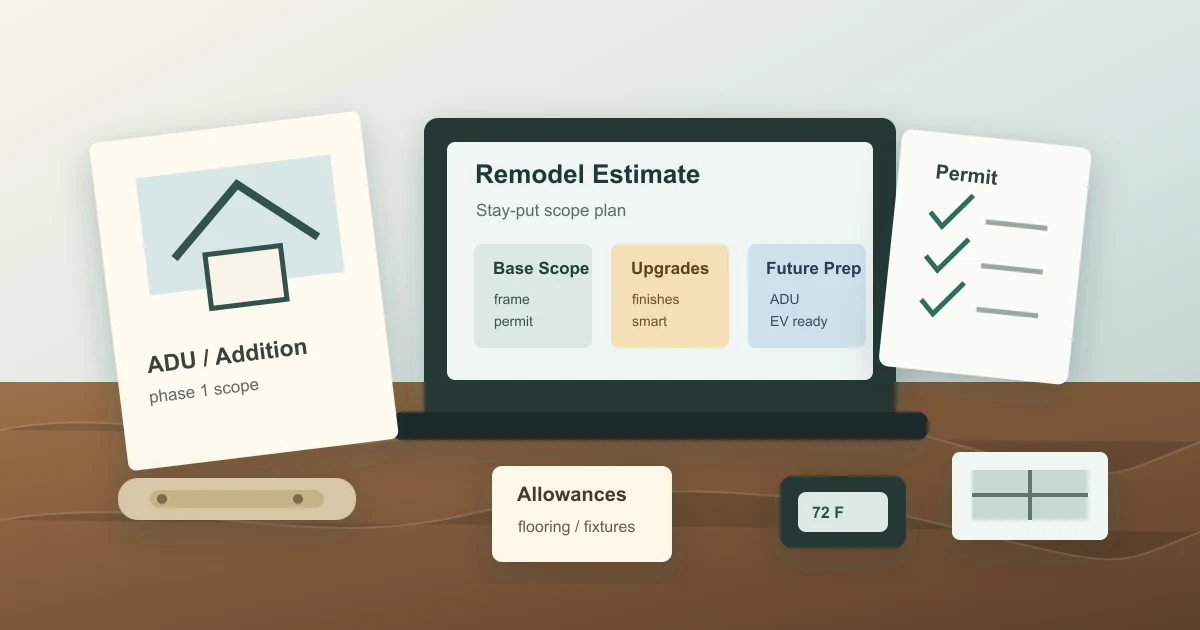
Use three buckets before you give a number: required work, comfort upgrades, and future-proofing. Required work is the base scope: framing, electrical, roofing, plumbing, insulation, or code items needed for the project to function. Comfort upgrades are the items the homeowner wants because they are staying longer. Future-proofing covers ADU prep, aging-in-place details, smart-home wiring, storm-resistant products, or EV capacity.
Price each bucket separately. If the customer needs to trim budget, you can remove or defer a bucket instead of discounting the whole job. This also protects your close rate because a serious homeowner can start with phase one instead of walking away from a giant all-in number.
- Base scope: what must be done for a complete job
- Upgrade scope: finishes, smart-home items, storage, and comfort features
- Future scope: ADU prep, weatherproofing, aging-in-place, and electrical capacity
Put Allowances and Exclusions in Plain English
Stay-put projects often hide expensive unknowns: old wiring, undersized panels, water damage, structural surprises, permit comments, or finish selections that change after the estimate. Put allowances next to the items that can move. Do not bury them inside one number.
A simple line works: "Flooring allowance: $X per square foot, material only. Customer-selected material above this allowance will be quoted as a change order before purchase." That language feels boring, but it keeps the job from turning into an argument at invoice time.
How LightWork Connects to This
If your website gets broad remodel inquiries, use intake to sort them before the first call. LightWork can show a realistic ballpark range, collect project type, home age, photos, budget comfort, and timing, then route serious stay-put remodel leads into a scoped follow-up instead of a vague free-estimate visit.
Plain-English Terms In This Article
- Close Rate: The percentage of estimates that become paying jobs.
- Change Order: A written update to price/scope when job conditions change after the original quote.
Frequently Asked Questions
How should contractors quote homeowners who are renovating instead of moving?
Separate the job into phases: required work, comfort upgrades, and future-proofing. Price each phase clearly so the customer can defer scope without asking you to discount the whole remodel.
What allowances belong in a remodel estimate?
Use allowances for finish selections, fixtures, flooring, windows, electrical upgrades, and other items that can change after the walkthrough. Put the allowance amount and change-order trigger in writing.
How do I keep ADU or addition leads from wasting estimate time?
Ask for the project goal, budget range, desired timing, photos, permit status, and must-have features before visiting. Broad stay-put remodel leads need qualification before they get a full site appointment.
Next Step
Pair this content with a live estimate form and response automation so intent turns into booked work.
Check out more of our stories



Stay updated
Keep up with the latest news and updates from LightWork. Follow us on social to get new strategy posts first.