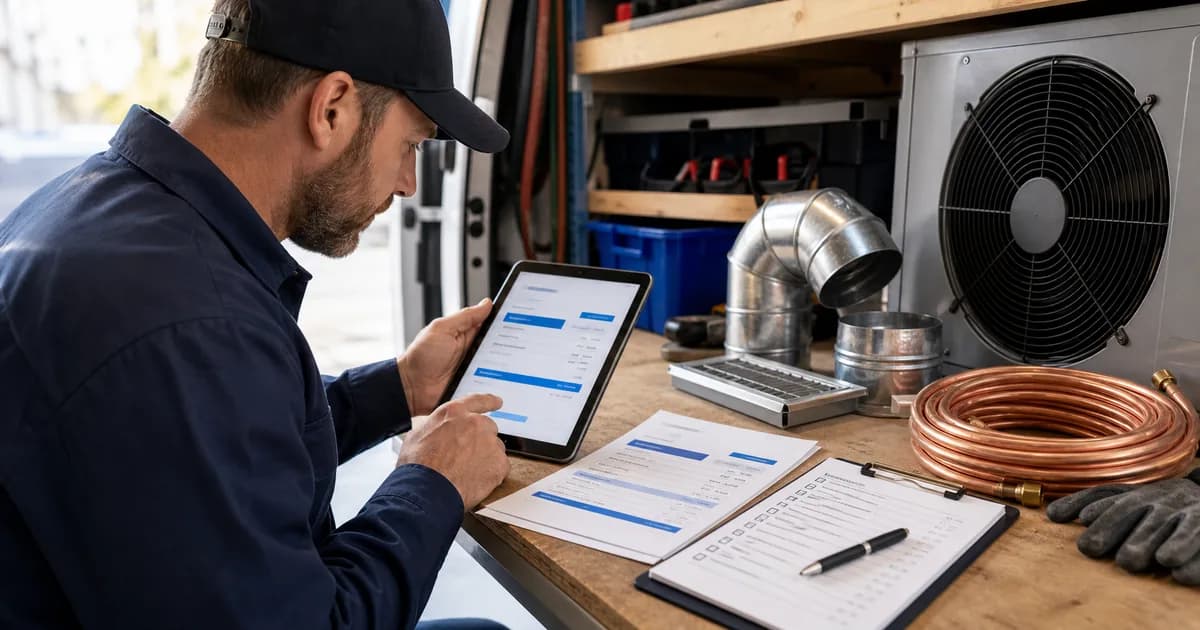
HVAC Price Increase Bid Scope Checklist
HVAC price increase bid scope checklist for small contractors who need to explain higher equipment and material costs without losing serious replacement leads.
June 11, 2026 · 6 min read · LightWork Team
Overview
HVAC replacement quotes are getting harder to explain. ACHR News flagged June HVACR price increases across parts of the supply chain, and Associated Builders and Contractors reported a 2.6% jump in May construction input prices. Homeowners do not care about index releases. They care why your number is higher than the cheaper bid in their inbox. The move is not to apologize for your price. The move is to show the scope so clearly that an incomplete cheap quote looks incomplete.
Build your implementation path with AI estimating workflows, pricing options, and guided setup.
The Core Answer
When equipment and material costs move, your estimate has to do more than list a system price. It has to separate the real job from the vague number.
For HVAC replacements, include the equipment match, duct or transition work, electrical scope, refrigerant line assumptions, permit handling, disposal, startup checks, warranty terms, and what is explicitly not included. That is what lets a homeowner compare your bid against another bid without guessing.
If you skip that detail, the cheaper contractor gets to look equal. If you show the scope, the homeowner can see whether the lower price actually covers the same job.
What to Add to Every HVAC Replacement Quote
Add a short scope block near the top of the estimate. It should be readable from a phone and specific enough that the customer knows what they are buying.
Use this order: system being replaced, equipment level, included labor, known extras, unknown conditions, permit or inspection status, and expiration date. Keep the language plain. A homeowner should not need to understand model numbers to understand why the price is real.
Example: "Includes removal of existing furnace and condenser, matched 3-ton heat pump system, basic pad and disconnect work, startup test, haul-away, and one-year labor warranty. Does not include duct replacement or electrical panel upgrades unless listed below."
- Put your quote expiration in writing, especially when suppliers are posting price changes.
- List allowances separately instead of burying them inside one big number.
- Call out permit, disposal, and warranty coverage because cheap bids often hide those gaps.
How to Handle the Cheaper Bid Conversation
Do not argue with the customer. Ask for the competing scope.
A simple response works: "Happy to compare. Can you send the other quote so I can see whether it includes permits, disposal, startup, duct transitions, electrical, and warranty?"
That turns the conversation away from "you are expensive" and toward "are we comparing the same job?" Some buyers will still choose the lower number. That is fine. The ones who care about a clean install now have a reason to stay with you.
How LightWork Connects to This
If you use a website estimate flow, make the first price range honest and scoped. LightWork can show a ballpark range before the lead calls, then collect the system age, home size, service area, and replacement details you need for the real quote. That keeps price-sensitive shoppers from becoming long phone calls while giving serious buyers a clearer next step.
Frequently Asked Questions
How should HVAC contractors explain price increases to homeowners?
Explain the scope, not just the increase. Show the equipment, labor, permit, disposal, startup, warranty, and exclusions so the homeowner can compare your quote against cheaper bids line by line.
Should HVAC quotes include an expiration date?
Yes. Use a clear 7-14 day expiration window when supplier pricing is moving. Put the date directly on the estimate so you can reprice cleanly if the customer waits.
What should I say when a homeowner has a cheaper HVAC quote?
Ask to compare scope. A good script is: "Happy to compare. Can you send the other quote so I can see whether it includes permits, disposal, startup, duct transitions, electrical, and warranty?"
Next Step
Pair this content with a live estimate form and response automation so intent turns into booked work.
Check out more of our stories



Stay updated
Keep up with the latest news and updates from LightWork. Follow us on social to get new strategy posts first.