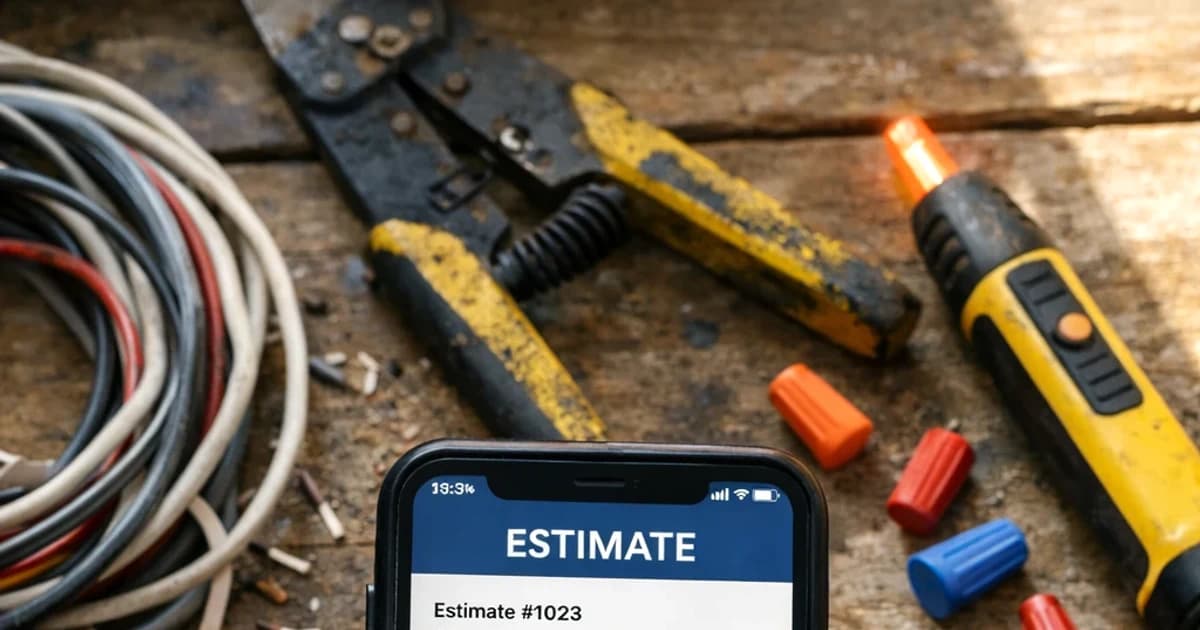
Do Electricians Hate Small Jobs? A Pricing Playbook
Do electricians hate small jobs? Use this pricing playbook to set a minimum charge, protect your time, and keep small calls profitable.
March 29, 2026 · 6 min read · LightWork Team
Overview
You do not hate small jobs. You hate small jobs that pay like small jobs. Driving 30 minutes, spending 20 minutes on an outlet swap, and walking away with $40 is not a job. That is losing money while feeling busy.
Build your implementation path with AI estimating workflows, pricing options, and guided setup.
The Core Answer
Here is how to fix the small job problem without turning away work.
The fix is a minimum charge. Set it, stick to it, no exceptions.
A $150-200 trip fee (or minimum charge) changes everything. A 20-minute outlet swap becomes a $150-200 job. A quick switch replacement that used to pay $60 now pays what your time is actually worth. Without it, you are spending $25 in gas and 2 hours of your day for $60.
The minimum charge is not a scam. It covers your drive time, your insurance, your truck, and the fact that you showed up. Every trade that runs a business has one.
When It Gets More Complicated
1. The customer is already a repeat client. You can waive the minimum for a good customer if you choose. That is a relationship call, not a pricing rule. Make it intentional, not a default.
2. You are already in the neighborhood. Stack jobs on the same street or same subdivision when possible. Two small jobs in a row changes the math. You still have a minimum per job, but you have cut your drive cost in half.
3. The small job leads to a bigger one. An outlet swap often turns into a panel conversation. Show up, do good work, and do a quick walkthrough at the end. Some of your best leads start as $150 jobs.
How to Actually Do It
1. Set your minimum charge now. $150-200 is standard for residential electrical in most markets. Higher cost of living areas: $200-250.
2. Put it on your website. "Minimum service charge: $150." Customers who cannot stomach that will not call you. That is the goal.
3. When you answer the phone, say it before the customer asks. "My minimum for a service call is $150. That covers the first 30-45 minutes on site. Want me to come take a look?" Let them decide.
4. Do not apologize for it. You are a licensed electrician. Your time has a floor.
5. Track which small jobs turn into bigger work. Over a few months, you will know which types of small calls are worth taking and which ones are just wasted drive time.
How LightWork Connects to This
LightWork puts a ballpark estimate on your website before anyone calls you. A customer who sees "$150 minimum" in your estimate range before they submit a contact form is a customer who has already decided they are okay with your pricing. The tire-kickers who want a guy to come out for $50 filter themselves out before they ever reach you.
Frequently Asked Questions
What should my minimum charge be as an electrician?
$150-200 for most residential markets in 2026. In high cost of living areas like Chicago, NYC, or the Bay Area, $200-250 is common and defensible. The number should cover your drive time, first 30-45 minutes on site, and the cost of showing up. If a job takes longer, you quote the rest of the work from there.
How do I explain a trip fee to customers who push back?
Be straightforward. "My minimum service charge is $150. That covers the first 30-45 minutes on site. If the job is bigger than that, I will give you a full quote before I start anything." Most customers who push back on this are not the customers you want. The ones who accept it understand that your time has value.
Should I waive the minimum if I am already in the neighborhood?
That is your call. If stacking jobs on the same street makes the math work, do it. But the minimum still applies per job. Do not quietly waive it just because someone asks. Once you waive it for one person, word gets around.
Next Step
Pair this content with a live estimate form and response automation so intent turns into booked work.
Check out more of our stories



Stay updated
Keep up with the latest news and updates from LightWork. Follow us on social to get new strategy posts first.