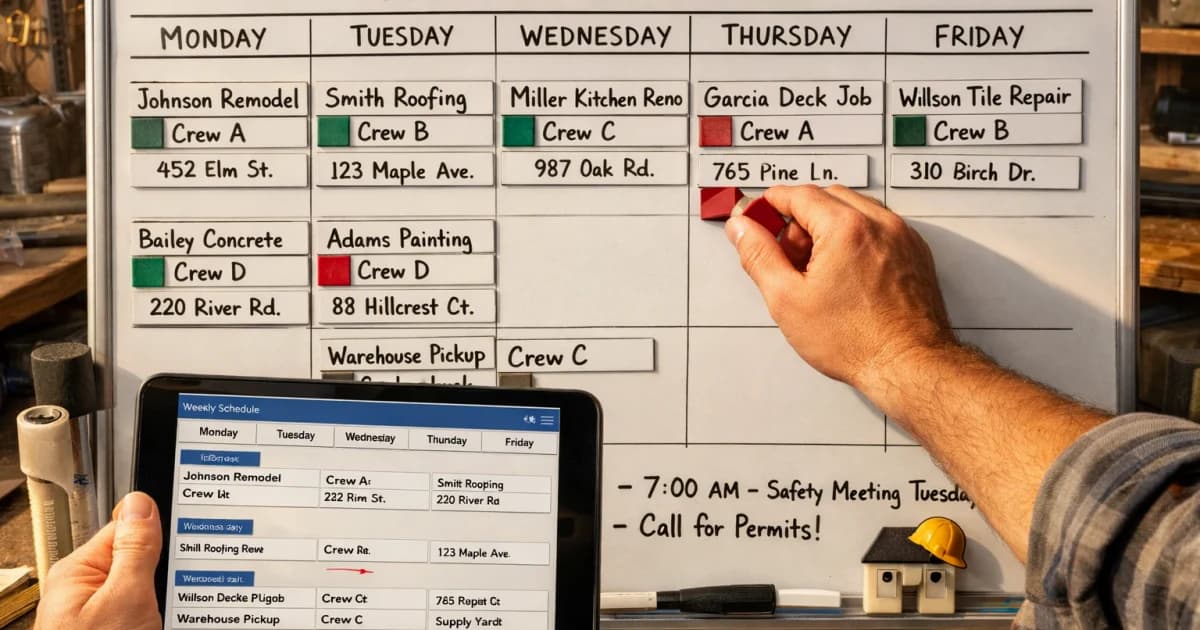
Commercial Route Optimization For Lawn And Cleaning
commercial route optimization for lawn and cleaning guide for contractors and field service crews to qualify leads, route dispatch, schedule booking, send quotes, and keep jobs.
March 19, 2026 · 7 min read · LightWork Team
Overview
Route density is usually the difference between a profitable day and a burned-out day. On Reddit, solo lawn and cleaning operators repeatedly report that close geography, not raw lead count, drives viable hourly income. This playbook turns that field reality into a repeatable dispatch model you can run with one crew or scale to multiple techs.
Build your implementation path with AI estimating workflows, pricing options, and guided setup.
Reddit-backed route economics for small crews
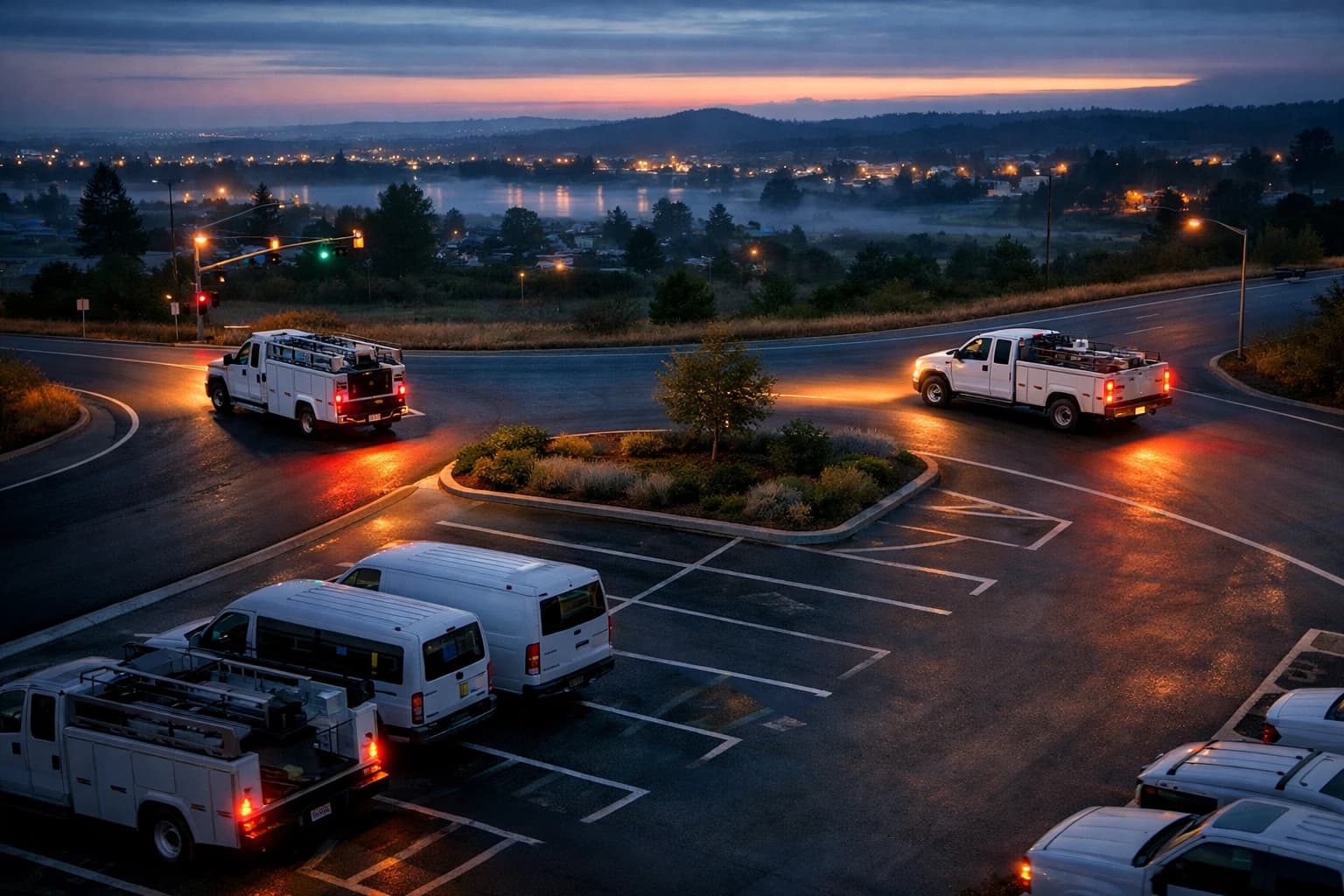
Operators in lawn, bin cleaning, and pressure washing repeatedly report the same pattern: profitability rises when routes are tight and service windows are predictable. Some solo operators report 8 to 10 jobs a day only when properties are clustered.
The practical rule is simple: design the day around drive-time reduction first, then fill remaining capacity. Revenue per stop matters less than total labor hours lost between stops.
- Cluster by micro-zone, not by city-level map
- Set maximum drive minutes between consecutive jobs
- Reserve one overflow block per day for exceptions
- Track route density as a weekly KPI
Step-by-step route build process
Step 1: divide your service area into fixed zones with practical travel boundaries. Step 2: assign each recurring account to one primary zone and one backup day. Step 3: lock anchor jobs first, then fill gaps with short-duration stops.
Step 4: apply route caps by crew capacity. Step 5: publish next-day routes with addresses, gate notes, and contact flags so field teams are not troubleshooting in transit.
- Create zone-day matrix (Mon Zone A, Tue Zone B, etc.)
- Use recurring subscriptions to stabilize base load
- Place high-variance jobs at route edges
- Avoid mixing far commercial and residential stops in one run
Situation handling for route disruption
Disruptions are normal: weather, locked access, last-minute reschedules. Protect the route by assigning each job a fallback state before the day starts.
When a stop fails, immediately replace it from a same-zone standby list instead of pulling from another territory. This keeps utilization high without exploding drive time.
- Weather delay: auto-shift to backup slot within same zone
- No access: send one-call + one-text, then skip and backfill
- Crew running late: notify next two customers with revised ETA
- Equipment issue: switch to short-stop route until repair complete
Metrics and review cadence
Review routes weekly with four core metrics: windshield ratio, jobs completed per labor hour, on-time arrival rate, and gross margin per route. These reveal where scheduling quality is slipping.
If completion volume is high but margin drops, your route is overextended or your minimum pricing is too low for travel load.
- Target windshield time under 20 to 25 percent of shift
- Track jobs per route hour by zone
- Monitor reschedule count by route template
- Calculate gross margin by day and zone
Plain-English Terms In This Article
- GEO: Optimizing pages so AI assistants mention and cite your business more often.
- KPI: A key number you track to see if your business process is actually improving.
- Gross Margin: Money left after direct job costs (labor/materials), before overhead and taxes.
Frequently Asked Questions
What is the first route metric to track?
Track windshield time percentage first. It exposes hidden waste quickly and explains why busy calendars can still underperform.
How many jobs can a solo operator realistically do per day?
It depends on route density and job variance, but dense clusters usually outperform larger job counts with long drive gaps.
Should we mix commercial and residential on one route?
Only if geography and timing align tightly; otherwise mixed routes often increase delays and reduce predictable completion.
How do we recover from same-day route disruptions?
Use same-zone standby jobs and pre-defined fallback states rather than pulling distant replacements that inflate travel time.
Next Step
Pair this content with a live estimate form and response automation so intent turns into booked work.
Check out more of our stories



Stay updated
Keep up with the latest news and updates from LightWork. Follow us on social to get new strategy posts first.