Callback Reduction Checklist for Contractors
How to cut costly callbacks with better end-of-job walkthroughs, care instructions, and warranty clarity.
March 29, 2026 · 6 min read · LightWork Team
A callback is not just an inconvenience. It is a $400 job that costs you another 2 hours, maybe parts, and gas, but you eat it because you do not want the bad review. Do that 5 times a month and you have lost a full day of revenue.
The contractors with the lowest callback rates do not have fewer problems. They do better handoffs at the end of every job.
The Core Answer
Three things cut callbacks more than anything else: a walkthrough with the customer at the end of every job, a short care card for the first 48 hours, and clear warranty terms agreed to before the work starts.
Most callbacks happen because the customer did not understand what was done, did not know what to avoid afterward, or had an expectation that was never set. All three are fixable before you leave the job site.
When It Gets More Complicated
1. The customer is not home when you finish. Call or text them before you leave: "Job is done. Here is what we did. Here is what to watch for in the next 48 hours. Call me if anything seems off." Put it in writing.
2. You are subcontracting work and do not do the final walkthrough. Set a standard with every sub: no job is complete until the customer gets a walkthrough, even if it is a quick one. If you are not on site, the sub does the walkthrough and reports back.
3. The callback is clearly customer damage, not your work. This is where your warranty terms matter. "Our warranty covers workmanship defects for 1 year. It does not cover damage caused by misuse, third-party modifications, or events outside normal use." Have that in writing on every signed estimate.
How to Actually Do It
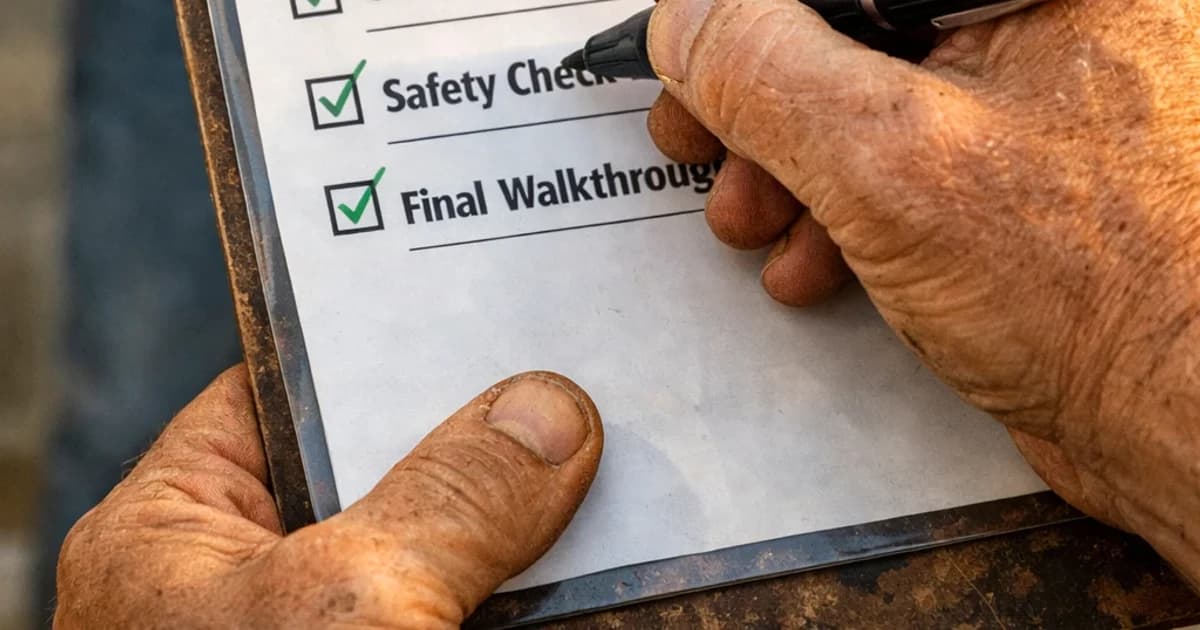
Callback Reduction Checklist (run this at the end of every job):
1. Walk the customer through the completed work. Show them what you did. Let them ask questions. Get verbal sign-off: "Does everything look good to you?"
2. Leave a care card or send a text summary. What was done, what not to do in the next 48 hours, and when they should call you.
3. Review your warranty terms with them. "Our work is warrantied for [X] days/months. Here is what that covers and what it does not." Short and plain.
4. Take photos of the completed work before you leave. Date and label them. If there is ever a dispute about whether something was done, you have documentation.
5. Check in 2-3 days later with a quick text. "Hey, everything working okay from [job]?" This catches small issues before they become callbacks and shows customers you care enough to follow up.
FAQ
Why am I getting so many callbacks?
The most common causes: no customer walkthrough at the end of the job, no care instructions for the first 48 hours, and warranty terms that were never set in writing. Less commonly, it is a quality issue with the work itself. If the same type of job is generating repeated callbacks, look at your process for that job. Otherwise, better handoffs solve most of it.
Who pays for a callback? Me or the customer?
Depends on whether the issue is your workmanship or something the customer caused. If it is your work, you eat it and fix it. That is just the cost of doing business with your reputation intact. If the customer clearly caused the problem (damaged what you installed, ignored your care instructions, had someone else mess with your work), that is a different conversation. Have the warranty terms in writing so you have something to point to.
What is a good callback rate for a contractor?
Less than 5% of jobs. The best operations run under 2%. If you are getting called back on more than 1 in 10 jobs, something systemic needs to change. Start with the end-of-job walkthrough. That single habit cuts most callbacks.